

A kedai borong kurma is a wholesale date shop. The point of buying there is pack size. Buying by the kilo or by the 5kg pack rather than by the small tub lets buyers who need a lot at once (a family before Ramadan, a caterer, a surau committee, a shop restocking its shelf) work out what each kilo is really costing them. This article looks at what a buyer actually finds in a wholesale date shop, where the stock comes from, how the bigger packs compare on price, and how to keep a bulk buy in good condition at home.

A sweet tradition with kedai borong kurma
Demand for dates in Malaysia peaks before and during Ramadan. Hari Raya, weddings (hantaran), kenduri and umrah gifts are other peaks.
The Ramadan link goes back to the Sunnah. Anas ibn Malik narrated that the Messenger of Allah (ﷺ) "used to break his fast before praying with some fresh dates; but if there were no fresh dates, he had a few dry dates, and if there were no dry dates, he took some mouthfuls of water" (Sunan Abi Dawud 2356, graded hasan sahih by Al-Albani). The two words in the Arabic, ruṭabāt and tamarāt, match the two ripeness stages the trade still uses: rutab is the soft, fresh-ripe stage and tamar is the fully ripe, drier stage.
For families, buying for the whole month in one go is the obvious draw. We set the shop counter against online buying of dates in a separate post.
Everything on the shelf is imported
Malaysia has no commercial date-growing trade. Every date in a Malaysian wholesale shop is imported. Here are the varieties named on one Malaysian wholesaler's price list, with the origin and description that hold up.
| Variety | Origin | What it is like |
|---|---|---|
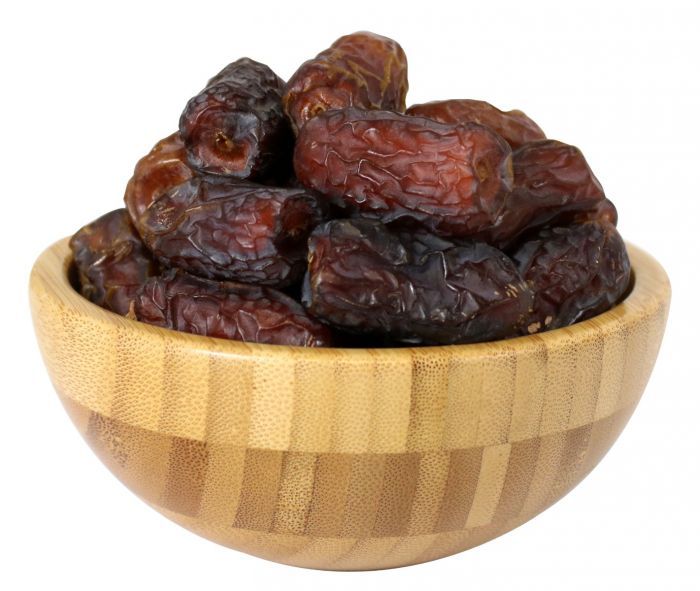
| Ajwa ("Kurma Nabi") | Madinah, Saudi Arabia | Small, roundish, near-black, finely wrinkled skin, soft. |
| Safawi | Madinah region, Saudi Arabia | Longer than Ajwa, dark brown to black, soft and chewy. |
| Sukari | Al-Qassim, Saudi Arabia | Golden-amber, very sweet. Sold soft (rutab) or drier. |
| Medjool | Originated in Morocco. The packs in the price list below are labelled Palestine. | Large, very soft, rich caramel taste. |
| Mariami | Iran | Dark, semi-dry, chewy. |
| Mazafati | Bam, Kerman province, Iran | Dark, very soft. Needs refrigeration. Cold-stored and sold year-round (both Mazafati listings on the price list checked were out of stock in November 2026). |
| Deglet Noor ("kurma tangkai" on the stem) | Tunisia / Algeria | Golden, translucent, semi-dry. |
Ajwa and Medjool are both soft dates. The choice between them comes down to size, colour and price, which the next sections cover. For the stem-on Deglet Noor, our piece on kurma tangkai explains how the branches are harvested and graded.
Where a kilang kurma fits in
Before dates reach a shop shelf, they pass through a packinghouse. The FAO handbook Date Palm Cultivation (2002) describes two ways of packing: in bulk and for retail. Bulk packs usually weigh 5 kg or 15 lbs, depending on the country, and the fruit "may be handed over to be repacked in the countries where it is to be marketed", with retail packing done to the customer's requirements. Among the outlets FAO lists for tamar-stage dates are collecting and bulk packing centres and "small, medium, and large-scale packing plants for bulk shipments and retail packs".
That is the job a kilang kurma, a date packing plant, does in the chain. Our guide to OEM kurma covers what repacking under your own brand involves. FAO also notes that in most importing countries the law asks for weight, country of origin, quality and date of expiry on the package, so those are the first four things to read on any wholesale pack, from a kilang kurma or anyone else.
Does buying bigger cost less per kilo?
Often, but not always. The only way to test it, at a kedai borong kurma or anywhere else, is to put real packs side by side. The prices below are one Malaysian wholesaler's, checked in November 2026.
| Pack | Price | Per kg | Stock |
|---|---|---|---|
| Ajwa AAA VIP (Large), 1kg | RM44 | RM44 | In stock |
| Ajwa Premium VIP AAA, 5kg | RM175 | RM35 | In stock |
| Ajwa Premium VIP AAA - 5kg (second listing) | RM231 | RM46.20 | Out of stock |
| Safawi AA, 1kg | RM40 | RM40 | Out of stock |
| Safawi AA pouch, 200g × 24 | RM185 | (4.8kg in total) | Out of stock |
| Safawi Premium AA, 5kg | RM153 | RM30.60 | In stock |
| Medjool Palestin Jumbo, 900g (single box) | RM70 | RM77.78 | In stock |
| Medjool Palestin Premium Jumbo, 5kg | RM280 | RM56 | In stock |
| Medjool Palestin Jumbo 2026, 500g × 12 | RM355 | RM59.17 | In stock |
| Medjool Palestine Jumbo, 500g × 12 (second listing) | RM290 | RM48.33 | Out of stock |
| Medjool Palestin Jumbo, 900g × 8 | RM448 | RM62.22 | In stock |
Read across the rows and the pattern is clear but not tidy. The in-stock 5kg Ajwa VIP AAA comes to RM35 a kilo against RM44 for the 1kg pack, about a fifth less. The out-of-stock RM231 listing with the same grade letters would have cost more per kilo than the 1kg pack. With Medjool Jumbo, the single 900g box is by far the dearest per kilo, but the biggest pack is not the cheapest. The 7.2kg (900g × 8) works out above the 5kg pack, RM62.22 a kilo against RM56. And the two 500g × 12 listings, same size and similar names, sit RM65 apart, with the cheaper one out of stock.
So at a kedai borong kurma, check the per-kilo figure, not the pack size, and compare like with like. A grade name that sounds the same on two listings can sit at two different prices. Our guide to wholesale prices from a kilang goes further into pricing for resellers.
What is in 100g of dates
Plain figures are more useful than adjectives here. These come from USDA FoodData Central (SR Legacy) for Deglet Noor and Medjool dates.
| Per 100g | Deglet Noor (FDC 171726) | Medjool (FDC 168191) |
|---|---|---|
| Energy | 282 kcal | 277 kcal |
| Carbohydrate | 75.0g | 75.0g |
| Fibre | 8.0g | 6.7g |
| Protein | 2.45g | 1.81g |
| Potassium | 656mg | 696mg |
Those are per-variety averages. A wholesale pack of Ajwa or Mariami is not covered by either row, and neither row is broken down by grade.
Keeping a bulk buy in good condition
How long dates keep depends on how moist they are and how cold you hold them. FAO's handbook gives storage figures from research in Tunisia. Moister dates needed 0°C to keep for 6 to 8 months. Drier fruit could be stored for more than a year, and the driest group could be held at 25°C for up to a year. The same research found that high sugar together with high humidity makes spoilage worse.
Soft, fresh dates are a different case. FAO says rutab dates "quickly turn sour and become of no commercial value" unless they are cold stored. Mazafati, the soft Iranian date from Bam, needs refrigeration. It is cold-stored and sold year-round, though both Mazafati listings on the price list checked were out of stock in November 2026. Varieties sold at the khalal stage, such as Barhee and Zaghlool, are kept at 1°C, which FAO says extends their shelf life from a few weeks to as much as 6 to 8 weeks.
Our longer piece on how long dates last draws on the same FAO chapter.
Using a bulk pack in the kitchen
A big pack is easier to finish if dates go into cooking as well as onto the iftar plate. FAO notes that tamar-stage fruit is used for year-round eating and for products such as "cakes, sauces and components of granules or date honey". Date paste can be used as a filling for cakes, and FAO points out that its melting temperature is higher than baking temperature, so the filling does not run out during baking. Date syrup, sometimes called dibs, is used to sweeten other foods.
At home that translates simply. Chop dates into a cake or bread batter, blend a few into a milkshake, or stir chopped dates into a stew or salad.
Short answers
Is a kedai borong kurma only for businesses?
Not necessarily. A household that gets through a lot of dates in Ramadan can compare per-kilo figures the same way a shop does.
Are dates cheaper during Ramadan?
No price data here supports that. The prices above come from a single check in November 2026, so compare per-kilo figures again when you buy.
Why do the same grade letters sit at different prices?
Grades such as A, AA, AAA and Jumbo are each importer's own size sorting, not an international standard. Compare listings by the full product name and the per-kilo price.
More about this site is on the About Us page and the contact page.