

Ask a Pemborong Kurma (date wholesaler) how long dates last and the honest answer is "it depends", followed by two questions: how much water is still in the fruit, and how cold it is kept. FAO's date palm handbook gives storage times ranging from a few weeks to more than a year, and its figures move with exactly those two things. Part of the answer is settled before the box leaves the kilang kurma, the packing plant where dates are fumigated, sorted, stored and packed.
This guide sets out what FAO actually reports, what it means for a box at home or a stockroom shelf, and the signs that a date has gone off.
What decides how long dates keep
The ripening stage
Dates go through five stages on the palm: hababouk, kimri, khalal, rutab and tamar. FAO says dates at every stage except tamar are perishable because of their high water content. Take rutab, the soft fresh-ripe stage. Unless it is cold stored, FAO says the fruit quickly turns sour and loses its commercial value.
Tamar is the fully ripe, drier stage. At this point the skin wrinkles as the flesh shrinks, and the colour of the skin and flesh darkens with time. So an older box of tamar dates may simply look darker. FAO describes that as part of the tamar stage.
Water left in the fruit
FAO's packing chapter is blunt about it. To keep dates for any length of time without refrigeration, the moisture has to be brought down far enough, and the right level depends on the variety. FAO links fermentation, souring and mould to wet fruit kept without refrigeration.
The variety
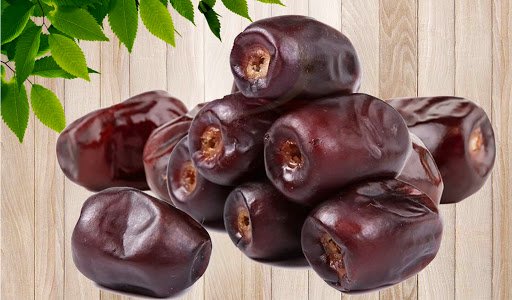
Variety matters too. Mazafati from Bam in Iran is dark, very soft and high in moisture, and it needs refrigeration. It is cold-stored and sold year-round, which is why you can buy it as "rotab" in any month.
Medjool dates are named in FAO's handbook as one of the varieties commonly held at minus 18°C for long-term storage. That temperature cuts water loss and also reduces sugar crystallising and the skin pulling away from the flesh. FAO adds that the sugar-crystal problem does not occur in Deglet Nour.
Storage times FAO reports
These figures come from packing and storage work, not from a kitchen cupboard, but they show the pattern clearly.
| Dates and condition | Temperature | How long they kept |
|---|---|---|
| Tunisian research, at the higher humidity level studied | 0°C | 6 to 8 months |
| Same research, at lower humidity | Not given separately | More than a year |
| Same research, at the lowest humidity level | 25°C | Up to a year |
| Barhee and Zaghlool sold at the khalal stage | 1°C | From a few weeks up to 6 to 8 weeks |
| Deglet Nour sold on branches | Not given | Several weeks |
| Several varieties including Medjool, long-term | Minus 18°C | No fixed period given |
The same Tunisian work found that high sugar combined with high humidity makes it more likely the fruit goes bad. In its packing notes for Deglet Nour, FAO also says the fruit is sensitive and goes bad quickly (mainly by souring), is best kept at 0 to 4°C, and darkens if frozen.
Notice what the table does not say. It does not give one shelf life for "dates". The older version of this page claimed a month at room temperature, six months in the fridge and a year in the freezer for all dates. None of those numbers came from a source, and the FAO figures show why a single number cannot be right.
At home: cupboard, fridge or freezer
Translating packinghouse figures into kitchen advice needs care, so here is what the sources support and nothing more.
Mazafati and any other dates sold as rotab go in the fridge. Mazafati needs refrigeration, and FAO says rutab sours quickly unless it is cold stored.
The only room-temperature figure FAO gives is up to a year at 25°C, and that is for the driest fruit in the Tunisian study. Deglet Noor, Mariami and Sayer are described as semi-dry, and nothing in FAO's figure says whether a semi-dry box from a shop matches the driest fruit in that study. So it does not settle how long a semi-dry box lasts in a warm kitchen. If you cannot finish a box quickly, the fridge is the cautious choice.
For long storage, freezing has industry backing: minus 18°C is the temperature FAO says is commonly used for keeping several varieties, Medjool included. The exception FAO flags is Deglet Nour: its packing notes say the fruit darkens when frozen.
Whatever the temperature, keep dates closed up. FAO describes Deglet Nour packers laying cellophane over the fruit and pressing the lid shut to stop reinfestation and moisture loss. A sealed tub at home follows the same idea.
What happens at the kilang kurma before the box reaches you
FAO lists the processes a packinghouse uses to improve or keep quality: fumigation, washing, storage, refrigeration, hydration, dehydration and curing. Three of them bear directly on how long the fruit keeps.
Fumigation comes first. To store fruit for a long period, which FAO puts at several months to a year, it must be completely cleared of insects, including eggs, pupae and larvae. Fresh fruit picked at the khalal stage is not fumigated, and neither is fruit kept under deep refrigeration. Methyl bromide has been the gas used most often, but in 1992 it was placed under the Montreal Protocol because of its damage to the ozone layer, and FAO names phosphine as the main alternative. After fumigation, the fruit has to be stored where it cannot be re-infested, and FAO says fumigated fruit should not be stored with unfumigated fruit.
Cold storage is next. FAO says the storage temperature is matched to how long the fruit will wait before the next step or before sale, and that refrigeration must not change texture, moisture or colour.
Packaging is the third. During storage the packing material counts too. FAO notes that cardboard is sensitive to humidity, some plastics are sensitive to low temperatures, and wooden surfaces can be attacked by pests. For fresh dates at the khalal or rutab stage, a temperature recorder goes into the container or truck, and the customer only signs for the shipment if the temperature record matches what was agreed.
This site has a separate Malay-language article on cleaning, grading and packing at a kilang kurma if you want the production side in more detail.

Handling stock in a shop or store
If you hold more than a household's worth of dates, whether bought from a wholesaler or straight from a kilang kurma, a few habits follow from the FAO material.
- Sell older stock first (first-in, first-out). FAO notes that tamar fruit darkens with time.
- Keep fumigated and unfumigated fruit apart, as FAO advises for packinghouses.
- Keep rotab and Mazafati in the chiller, not on an open shelf.
- Store empty boxes and packing material somewhere clean and dry. FAO's packinghouse standard says packing material must be kept in a clean, dry area free from contamination, and that cartons should not be stored in the packing area itself.
- Check fruit that has been held a long time. FAO advises sampling consignments stored for months before shipment, to make sure quality has not changed.
Signs a date has gone off
FAO's list of defects from microbes is short and useful. First comes alcoholic fermentation caused by yeast. Then comes souring, caused by bacteria such as lactobacilli and acetobacter, or by the fungus Aspergillus niger, which leaves a black growth that fills the cavity around the stone. FAO says these defects can come from poor storage, for example wet fruit kept without refrigeration, or can start while the fruit is still in the field.
That gives you three checks: fruit that has fermented or turned sour, black growth around the stone, and insect remains. Among insect defects, FAO says the most common are the remains of moths, sour bugs and mites. Any of these is a reason to throw the fruit away.
Some changes are about looks. For Medjool, FAO calls loose skin "an aesthetic defect rather than a taste defect", and sugar crystals forming on the flesh are an aesthetic defect too. FAO grades Medjool with more than 20 to 25% loose skin as Class II, and says sugar crystals also put the fruit in Class II. Darkening with time is something FAO describes as part of the tamar stage.
Short answers
Do dates need to go in the fridge?
Mazafati does, and so does any date sold as rutab, because FAO says rutab sours quickly unless cold stored. For semi-dry dates the fridge is the cautious choice if a box will be open for a while.
Can dates be frozen?
Yes. Minus 18°C is the temperature FAO says is commonly used for long-term storage of several varieties, Medjool included. FAO's Deglet Nour packing notes say that variety darkens when frozen.
Is there one shelf life for all dates?
No. FAO's figures run from a few weeks for fresh khalal fruit to more than a year for the drier fruit in the Tunisian study, depending on water content and temperature.
More about this site is on the About Us page and the contact page.